


WorthPoint
2.7280.00 Reviews
App Specs
- Version
- 6.3.1
- Updated On
- License
- Free
- Downloads
- 100,000+
- Developer
- WorthPoint
- Categories
- Shopping
- Platform
- Android
Screenshots
 Analysis by AppCompare
If you’re deciding whether to use WorthPoint, the first question I’d ask is what you want from a collecting app. If you need a quick way to identify an unfamiliar object, research its background, or put a price in context, a dedicated antiques and collectibles resource makes sense. If you mainly want to browse listings and buy something, a general shopping marketplace may be a better fit. Research is the point here, and that distinction matters before you spend time setting up an account or considering a paid option.
WorthPoint is a free shopping app from WorthPoint, aimed at antiques and collectibles research. It has been available since July 11, 2019, and version 6.0.7 requires at least OS 8.1. The app is rated for Teen users. Its average rating is 2.6 from around 600 ratings, so I wouldn’t approach it as a universally smooth experience; I’d treat it as a specialist tool and judge whether its research is useful for the objects I care about.
Start with the question you need answered
Before searching, I find it useful to decide whether I’m trying to identify an item, understand its history, or estimate what similar pieces have sold for. Those are related questions, but they are not interchangeable. A search result that looks like the same object may differ in maker, condition, age, or completeness, and those details can change how meaningful a price comparison is.
That is why I would use the app as one part of a decision, not as an automatic verdict on an object’s value. A historical sale can help me form a reasonable expectation, but it does not guarantee what a buyer will pay now. If I’m considering a purchase, I’d compare the item’s condition and identifying details with the examples I find before treating any figure as a guide.
The app has over 100,000 installs, but reach alone does not tell me whether it will suit a particular collector. The more specific my research habits are, the more likely I am to get value from a specialist archive. Casual browsing, on the other hand, may not justify learning another app if I only occasionally come across an old object.
First Impressions and Setup
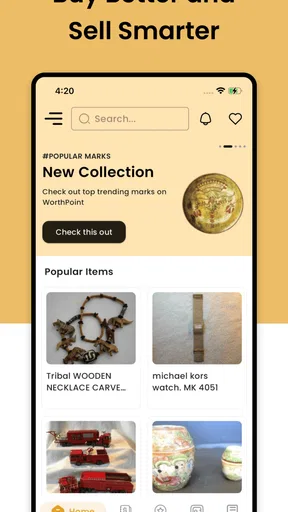
Getting started with WorthPoint is a breeze. The app has a clean and straightforward interface, making it easy for even the most tech-challenged among us to navigate. You sign up, and within minutes, you're ready to explore. The setup is intuitive, which is a huge plus when you're eager to start assessing your treasures.
Exploring the Features
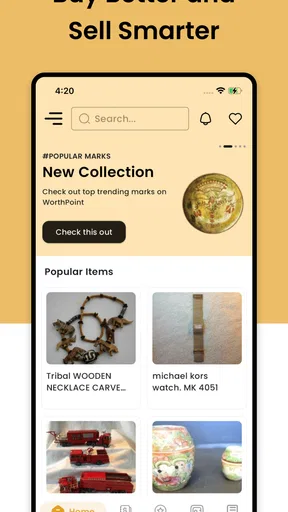
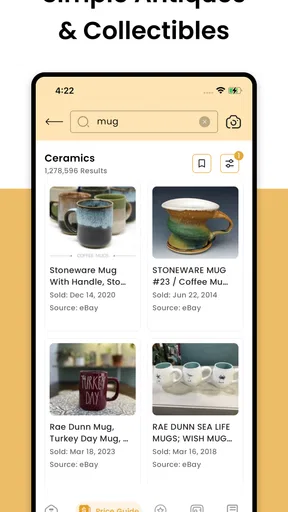
The app is packed with features designed to make your collecting journey smoother and more informed. The core of the app is its extensive database. You have access to millions of items with detailed descriptions, images, and most importantly, their historical values. The sheer volume of data is impressive and can feel like falling down a rabbit hole—in a good way!
Worth Reading Before You Choose

Flipboard Shows What News Apps Must Do Beyond the Feed

Switching to Android Auto Means Rethinking Your Driving Routine

Google Calendar Makes a Crowded Week Easier to Manage

Ludo King Makes the Most of the Minutes Between Plans

Baby Panda World Brings Quick Play to Modern Phones, but Its Game Library Feels Busy

ESPN’s Live Game View Makes Following Close Games Easier
Another standout feature is the "Worthopedia." Think of it as the Wikipedia of collectibles. It's a comprehensive resource where you can look up nearly any collectible item. This feature alone is worth the download if you're serious about understanding the worth of your collections.
Then there's the "Price Guide"—a tool that provides historical prices from various auctions and sales. It’s incredibly satisfying to see an item you own and realize it’s worth more than you thought. The app also includes a "Map Feature" that helps you locate local antique stores and events, which is super handy for planning your next treasure hunt.
Make research more useful than a single search
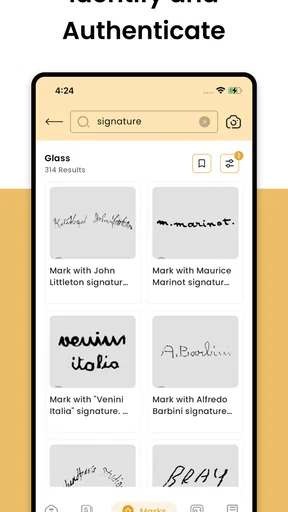
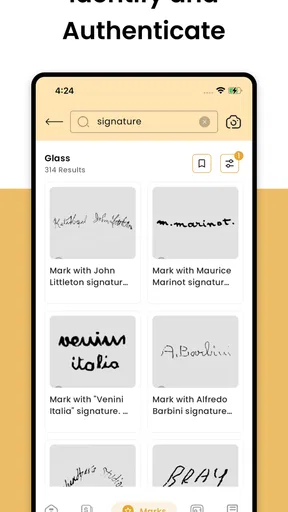
A practical way to use the reference material is to search with the details you can actually verify: a maker’s mark, a model name, a distinctive pattern, or a phrase on a label. I would start broad, then narrow the query using those clues rather than trusting the first result that shares a general description. For an object with no visible label, its shape, material, and construction can help me decide which results deserve a closer look.
When I compare historical sales, I’d keep a short note of why each example seems relevant: matching maker, similar condition, or the same set of parts. This small habit makes it easier to spot a near-match that is not genuinely comparable. It also prevents an exciting high sale from becoming the only number I remember when the examples around it tell a more ordinary story.
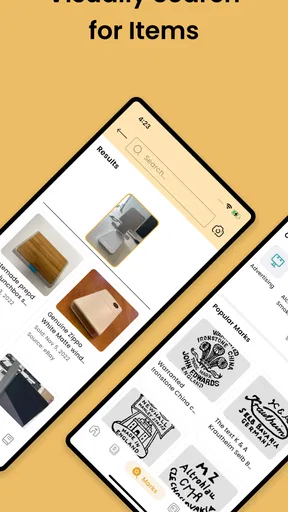
For an everyday scenario, imagine finding a decorative bowl while clearing a relative’s cupboard. I’d photograph the mark and any chips, search the maker or pattern, then review the closest descriptions and sale history. If the results disagree, that is a cue to investigate further or ask a knowledgeable person—not to pick whichever result gives the highest estimate. The app can help turn a guess into a better-informed next step, but the object in front of me still needs careful inspection.
Ease of Use
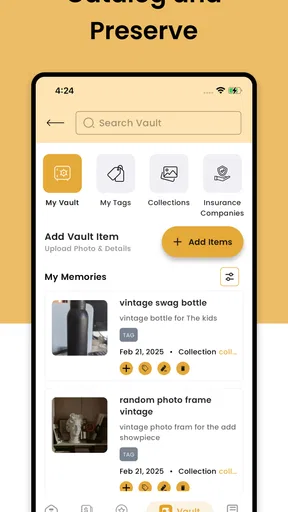
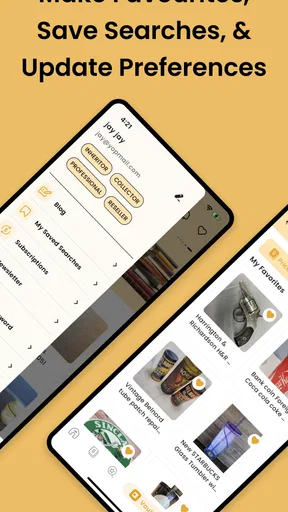
I found WorthPoint to be very user-friendly. The search function is robust, allowing you to type in keywords and get relevant results quickly. They've also made it easy to save items to your personal collection so you can track their value over time. This feature is particularly helpful for those of us who love to keep tabs on our growing hoards.
Navigation through the app is seamless. The layout is logical, and everything is where you'd expect it to be. Even if you're not particularly tech-savvy, you'll find yourself moving through the app with ease.
Use saved items as a working notebook
Saving an item is most helpful when I treat it as a record of what I am investigating, rather than proof that its value will move in a particular direction. I’d keep the identification details consistent and revisit the examples when I learn something new about the piece. If I’m cataloguing several objects from one collection, researching them in small batches also makes it easier to notice shared makers or styles without mixing up individual condition notes.
There is a trade-off, though: tracking an item over time is only useful if the saved record stays tied to the object’s real details. A broad label such as “old vase” is not enough to make later comparisons meaningful. I’d use the clearest name I can support, and keep any uncertainty visible in my own notes rather than quietly treating a tentative identification as settled.
The app is free to install, but it includes in-app purchases ranging from $19.99 to $399.99 per item. That is a substantial range, so I would check the purchase details carefully before committing and ask whether I will use the research often enough to justify it. Someone who is pricing one inherited object may be better off starting with free research options and only paying if the app’s depth is clearly useful for a continuing hobby or business.
Where other approaches may work better
Compared with a general shopping marketplace, a specialist reference app is more suited to looking backward at examples and context than browsing whatever is currently for sale. A marketplace can show asking prices and active listings, which are useful for seeing what sellers hope to receive, but those prices are not the same as completed sales. For a realistic estimate, I’d give more weight to comparable sold examples than to an unsold listing, while still checking whether the objects truly match.
Image search and broad web searches can be faster when I have only a rough visual clue or want to identify a common household object. They also draw from many kinds of pages, so the results can be inconsistent and may mix reliable references with unsupported claims. The advantage of a focused collectibles archive is that it keeps the investigation centered on antiques and collectible items; the limitation is that a narrow resource should not be mistaken for a complete answer to every identification question.
For an item whose authenticity, condition, or maker has significant financial consequences, I would not rely on an app alone. A specialist dealer, auction professional, or appraiser may be the better choice when physical inspection matters. I see digital research as a way to prepare sharper questions and avoid going into that conversation completely uninformed, not as a substitute for expert evaluation.
Community and Support
One of the coolest aspects of the app is its community. The app fosters a sense of camaraderie among collectors. There's a section where you can ask questions and share information with fellow users. It's like having a mini social network of people who share your passion for unique items.
Customer support is also solid. If you run into any issues, help is just a click away. The app includes a support section with FAQs and contact options, ensuring you're never left in the dark.
Know what to check before relying on a result
Community discussion can be useful when a listing or description leaves a gap, especially if another collector recognizes a mark or variation. I’d still separate a helpful lead from a confirmed identification: opinions can point me toward a maker or period to investigate, but I would compare that suggestion with the object and supporting examples before repeating it as fact.
Another sensible habit is to check whether a result describes the same kind of transaction I’m trying to understand. Auction history, sale records, and current asking prices can tell different stories. A number without its context is easy to misuse, so I’d look at the description and image as carefully as the price itself. This is particularly important when condition is hard to judge from a photograph or when an item is part of a set.
If you are wondering whether the app is suitable for a younger collector, its content rating is Teen. If you are wondering whether it works on an older device, the minimum operating-system requirement is 8.1. Those details are worth checking before downloading, especially if you plan to use the app while sorting items away from home.
Final Thoughts
Overall, the app is a must-have for anyone serious about collecting. It’s not just an app; it’s a companion that adds depth to your collecting journey. Whether you're a newbie or a seasoned collector, you'll find something to love here.
So, if you're ready to dive into the history and value of your collectibles, give WorthPoint a try. Who knows? You might discover that the dusty old item in your attic is worth a small fortune!
Who I’d recommend it to
I’d recommend WorthPoint most to collectors who regularly identify, compare, or catalogue antiques and collectibles, and to people who handle inherited objects often enough to need more than a quick web search. It is also a useful research companion for someone preparing to visit antique shops: checking an item’s identifying details and past examples beforehand can help them ask better questions and avoid relying only on a seller’s description.
I would skip it if I only wanted a place to shop for new products, if I rarely research collectibles, or if I expected an app to provide a guaranteed appraisal. The modest average rating is a reason to keep expectations measured and test the experience against a real research task before paying for anything. If I mainly need a one-off identification, a library reference, a reputable specialist, or a broad visual search may be a more proportionate starting point.
My recommendation is to begin with an object you can describe clearly and see whether the search results give you useful comparisons. If they do, try a second item and consider whether saved research would become part of your routine. That is a better test than downloading it because a single intriguing object might be valuable. For regular collectors, the focused reference approach can be worth exploring; for everyone else, it is a specialist option rather than an essential shopping app.
Pros
- Extensive database of antique values.
- User-friendly interface for quick searches.
- Regular updates with new listings.
- Includes historical price trends.
- Available on both Android and iOS.
Cons
- Requires subscription for full access.
- Limited offline functionality.
- Occasional app crashes reported.
- High data usage for image loading.
- No direct selling feature included.
FAQs for WorthPoint
What is WorthPoint and how does it work?
WorthPoint is an app designed for collectors and antique enthusiasts to research and assess the value of their items. It provides access to a vast database of historical sales data, images, and descriptions of various collectibles. Users can search for specific items to view past auction results and identify their worth.
Is a subscription required to use WorthPoint?
Yes, WorthPoint requires a subscription to access its full range of features. While the app is free to download, a paid membership is necessary to utilize the extensive price guide, library, and other premium services. Subscription options vary, allowing users to choose monthly or annual plans based on their needs.
Can I use WorthPoint offline?
WorthPoint primarily functions as an online platform, requiring an internet connection to access its comprehensive database and resources. While the app may allow limited offline access to previously downloaded data, full functionality and real-time updates require an active connection.
What kind of items can I research on WorthPoint?
WorthPoint covers a wide variety of collectibles, including antiques, art, coins, stamps, toys, and more. The app's extensive database includes millions of items, making it a valuable resource for collectors of all kinds seeking to verify the worth and authenticity of their treasures.
How accurate is the pricing information on WorthPoint?
WorthPoint aggregates data from numerous auction houses, marketplaces, and online sales, providing a broad view of historical pricing trends. While the app strives for accuracy, users should consider the fluctuating market conditions and use the information as a guide rather than an exact valuation tool.


